
The South Australian Government has announced it will introduce legislation to remove the current moratorium on hydraulic fracture stimulation (commonly known as fracking) in the Limestone Coast region.
This decision does not approve hydraulic fracture stimulation activity.
It removes a blanket restriction so that any future proposals can be assessed under South Australia’s existing regulatory framework.
The approach reflects changes in Australia’s energy security outlook and an expanded evidence base since the moratorium was introduced in 2018. It also ensures that South Australia retains the ability to consider potential future domestic gas supply, while maintaining strong protections for groundwater, the environment and existing industries.
Groundwater protection is a central consideration. No activity can proceed unless it meets all regulatory requirements and demonstrates that risks can be appropriately avoided or managed.
Read the news release: Unlocking more gas for South Australians
An online community information session was held on 26 May 2026 to discuss the hydraulic fracture stimulation regulatory assessment process.
Watch a recording of the session
Selected slides from the session
On this page
Decision to lift the moratorium
The moratorium, introduced in 2018 and due to expire in November 2028, has prohibited hydraulic fracture stimulation within the Limestone Coast council areas.
The Government is introducing amending legislation to Parliament to enable an earlier removal of the moratorium. Until this process is complete, the moratorium remains in force.
Removing the moratorium allows time for planning, technical studies and baseline environmental data collection to occur ahead of any potential future proposal.
Legislative process
The moratorium is embedded in the Energy Resources Act 2000 (as amended in 2018). Any change requires amendment of the Act by the South Australian Parliament.
To progress the change, the Government will:
- Introduce a Bill to amend the relevant provisions of the Act
- Seek passage of the Bill through both Houses of Parliament
- If the Bill is passed by both Houses of Parliament, the moratorium would be repealed, and the Energy Resources Act regulatory framework would apply
Until this process is complete, the current moratorium remains in effect.
Current moratorium area
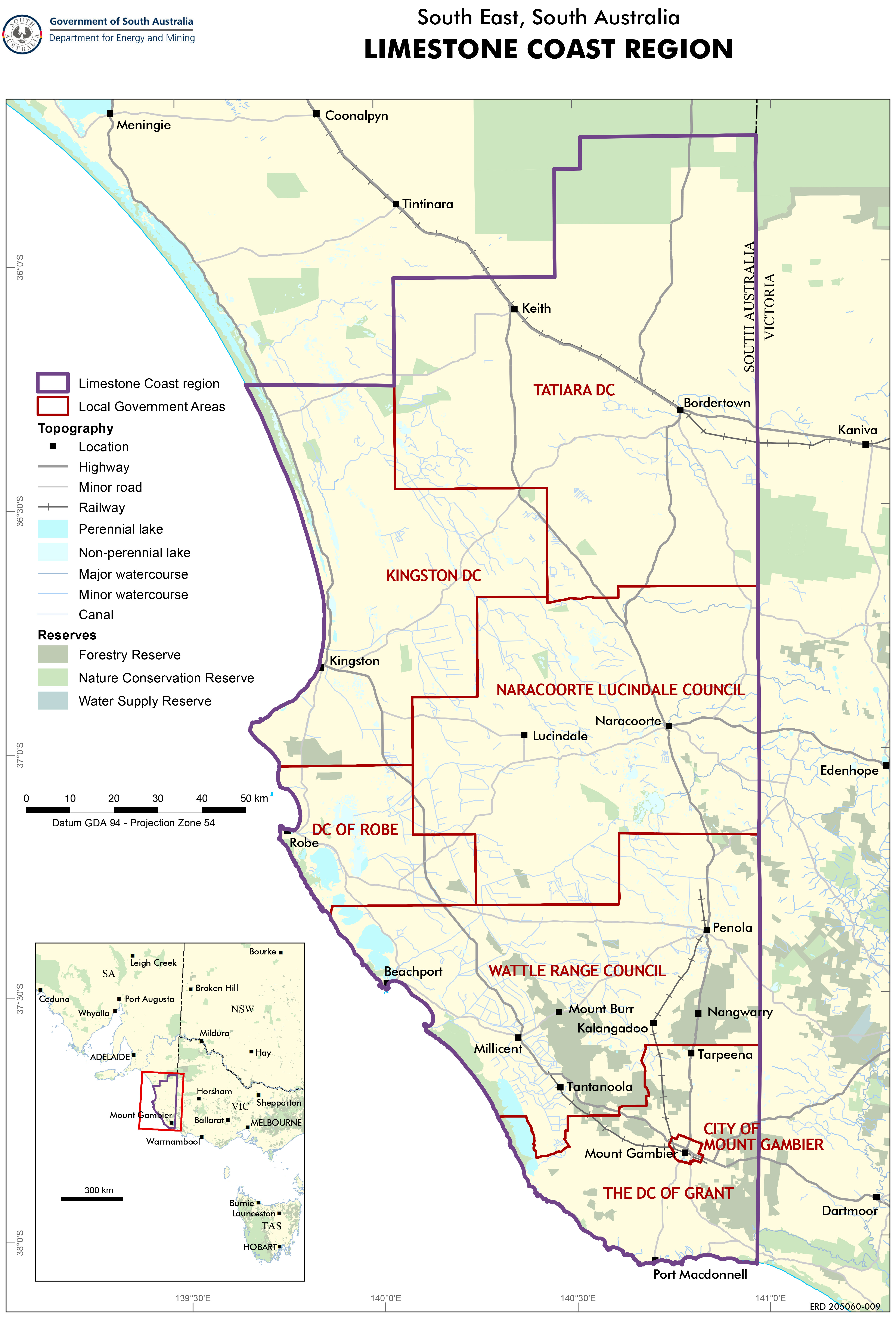
The moratorium applies to the following local council areas comprising the Limestone Coast region:
- City of Mount Gambier
- Naracoorte Lucindale Council
- District Council of Grant
- Tatiara District Council
- Kingston District Council
- Wattle Range Council
- District Council of Robe
During the moratorium period, applications involving hydraulic fracture stimulation are not considered under the Energy Resources Act 2000.
Safeguards and regulatory framework
If the moratorium is removed, any future activities involving hydraulic fracture stimulation would be subject to South Australia’s existing regulatory framework administered by the Department for Energy and Mining.
This includes:
- Comprehensive environmental assessment
- Mandatory public consultation
- Preparation and approval of Environmental Impact Reports (EIR)
- Approved Statements of Environmental Objectives (SEO)
- Ongoing monitoring, compliance and enforcement
Hydraulic fracture stimulation is already permitted in other parts of South Australia under this framework.
Any proposal would be required to undergo detailed assessment, consultation and receive formal regulatory approval before activity could occur.
Groundwater and environmental protections
Protection of groundwater resources and the environment is a key consideration for the Limestone Coast region.
Any future proposal would need to demonstrate, through rigorous scientific assessment, that:
- Groundwater and water-dependent ecosystems can be protected
- Environmental risks can be effectively managed
- Impacts on land use and regional industries are appropriately addressed
No activity can proceed unless all regulatory requirements are met.
Evidence and research
The decision to introduce legislation to remove the moratorium reflects an expanded evidence base.
This includes:
- Independent scientific research undertaken through CSIRO’s Gas Industry Social and Environmental Research Alliance (GISERA)
- Evidence from state inquiries around Australia into hydraulic fracture stimulation
- South Australia’s long-standing regulatory experience managing petroleum and gas activities
GISERA research provides independent, publicly available analysis of groundwater systems, environmental impacts, and social and economic considerations associated with onshore gas development.
The 2016 South Australian Parliamentary Inquiry into Unconventional Gas Development and the 2018 Northern Territory Inquiry into Hydraulic Fracturing both concluded that risks associated with hydraulic fracture stimulation can be managed acceptably with effective regulation.
Hydraulic fracture stimulation has also been undertaken in other parts of South Australia for decades under regulatory oversight. This includes the Cooper Basin, where 1,300 wells have been fracture stimulated since 1969, with no significant impacts on aquifers within the Great Artesian Basin, or other shallower aquifers.
Contact us
If you have any questions about the Energy Resources Assessment Process, please email DEM.Engagement@sa.gov.au