

The South Australian Government is proposing amendments to the Environmental Liability Management Policy under the Energy Resources Act 2000.
Background
The Energy Resources Act 2000 (Act) regulates the exploration for, and the recovery, production, transmission, storage and management of, certain energy resources.
The Environmental Liability Management Policy (Policy) has been in effect since 1 July 2020. It aims to effectively manage the environmental rehabilitation liability from regulated activities under the Act in South Australia.
The key target outcomes of the Policy are to reduce potential environmental risks by addressing expired wells, and to manage financial risks to the state in the event a licensee does not meet its environmental and rehabilitation obligations by requiring adequate levels of financial security to be held over operations.
The current Policy framework for managing financial exposure consists of four key elements:
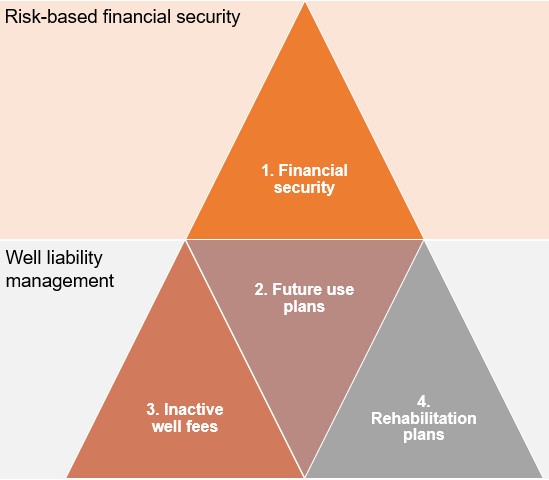
1. Risk-based financial security
Risk based on changes in financial capacity, licensed activities and deemed reserves.
2. Future use plans
For wells that have not been in use for more than 24 months, showing evidence of a bona fide future use.
3. Fees for inactivity
An annual fee for approved inactive wells, deposited into the Legacy Liability Fund to finance legacy wells that may become orphan.
4. Rehabilitation plans
Schedule a minimum number of expired wells (with no future use), or equivalent expenditure on other activities, for rehabilitation each year.
The Policy requires licensees operating under the Act to provide financial security to cover decommissioning and rehabilitation costs should the licensee fail to deliver on their obligations, and to account for the status of all licensed activities in annual reporting.
When the Policy was introduced, the Department for Energy and Mining (department) committed to reviewing the Policy following a period of operation to assess its ongoing suitability and effectiveness.
About the review
The review is underpinned by four key principles:
- Leading practice:
Informed by leading industry best practice for decommissioning requirements and financial assurance frameworks. - Balanced: Ensures the state is properly protected from cost of rehabilitation, without onerous obligations on licensees which discourage investment or viability of projects in South Australia.
- Risk-based: Financial security requirement is informed by actual exposure. Consideration given to the size, track record and financial stability or probability of default of licensees, as well as availability of reserves, recognising risk of activities towards end‑of‑life cycle as production declines to become uneconomic.
- Driving the right behaviour: Wells that are not in use for a prolonged period and unlikely to restart production are decommissioned in a timely manner, prioritising wells with higher environmental and integrity risks.
There are 2 stages to the review.
Stage 1 review
The first stage of the review covered rehabilitation liability estimates and well liability management.
Rehabilitation liability estimate (RLE)
The RLE review assessed the current rehabilitation liability estimation approach, and identified opportunities to improve the robustness of estimates.
RLE tools assist licensees in estimating liabilities associated with decommissioning and rehabilitation of energy resource projects. The current method used to estimate liability is based on a standardised and static schedule of cost estimates for various rehabilitation elements (for example wells, facilities, pipelines, flowlines, access road, seismic lines).
The existing cost schedule may not appropriately account for movements in input costs, market conditions or learnings from decommissioning activities over recent years. As a result, liability estimates derived from these rates may not fully reflect current rehabilitation cost expectations in South Australia.
In response to this, the department engaged independent industry experts to develop a new RLE tool, the RLE calculator, which helps ensure liability estimates are more closely aligned with current rehabilitation cost expectations.
Well liability management
This part of the review assessed whether wells, which are not in use for a prolonged period and unlikely to restart production, are decommissioned in a timely manner, whether the purpose and scope of the Legacy Liability Fund (Fund) remains appropriate and whether inactive well fees are set at appropriate levels to meet intended outcomes.
The probability of well failure and consequences to the environment increases as the well ages. Historical data also shows that the probability of a well restarting production after a period of inactivity also declines to less than 5% after 10 years or more of inactivity.
South Australia has observed an increase in decommissioning and rehabilitation activities since the introduction of the Policy, however new wells drilled have outpaced wells decommissioned over the same period. The number of inactive wells has increased by more than 10 times over the last five years, with 65 per cent of inactive wells currently aged 20 years or more.
It is proposed that, to improve decommissioning performance and outcomes, rehabilitation plans be broadened to schedule a minimum number of inactive wells (aged 20 years or more) for rehabilitation each year.
The review found that while potential legacy liabilities have increased over time, the Fund balance is on track to cover potential liabilities within the timeframes originally projected. No changes are proposed to the Legacy Liability Fund at this time. Inactive well fees will be indexed each year to account for inflation.
Findings from the Stage 1 review have informed proposed amendments forming part of this consultation process. Stakeholder feedback is being sought on proposed amendments to these two elements of the policy.
Stage 2 review
The department has commenced Stage 2 of the review covering the Financial Security Matrix.
This review will assess how effective the matrix is in managing the state’s rehabilitation and related financial risk exposure to energy resource licensees defaulting or failing to meet their environmental and rehabilitation obligations. This will inform any opportunities to strengthen risk assessments under the matrix.
Stakeholders will have an opportunity to provide feedback on any proposed changes resulting from this part of the review. This will form part of a separate consultation process.
Supporting information
- Current Environment Liability Management Policy
- Rehabilitation liability estimate consultation paper
- Rehabilitation liability estimate calculator
Provide your feedback
We are asking for you feedback over two consultation periods.
First consultation period: Rehabilitation liability estimate (RLE) calculator
| Key dates | |
|---|---|
| Consultation opens | 26 October 2026 |
| RLE calculator demonstration webinar |
20 November 2026 Register your interest by 18 November via email to: DEM.EnergyRegulation@sa.gov.au |
| Consultation closes | 18 December 2026 at 11:59 pm (ACST) |
Email your submission to DEM.EnergyRegulation@sa.gov.au
Second consultation period: Well liability management - Rehabilitation plans
| Key dates | |
|---|---|
| Consultation opens | 11 January 2027 |
| Consultation closes | 5 March 2027 at 11:59 pm (ACST) |
NOTE: The Well liability management consultation paper will be released closer to the commencement of this phase of the consultation.
Next steps
Following consultation, all feedback will be considered to help inform the final Policy update and any additional changes that may be required to ensure the Policy remains effective and fit for purpose.
The updated Policy is intended to come into effect on 1 July 2027 and will apply to 2026–27 activity status submissions.